
The Pinball Machine That Started the Hollywood Movie Pin
A 1978 Gottlieb classic, a Ray Harryhausen film, and the corporate deal that quietly invented every Star Wars and Marvel pin that came after.

The pinball machine I learned the hobby on has been in my family since I was small enough to crawl inside it.
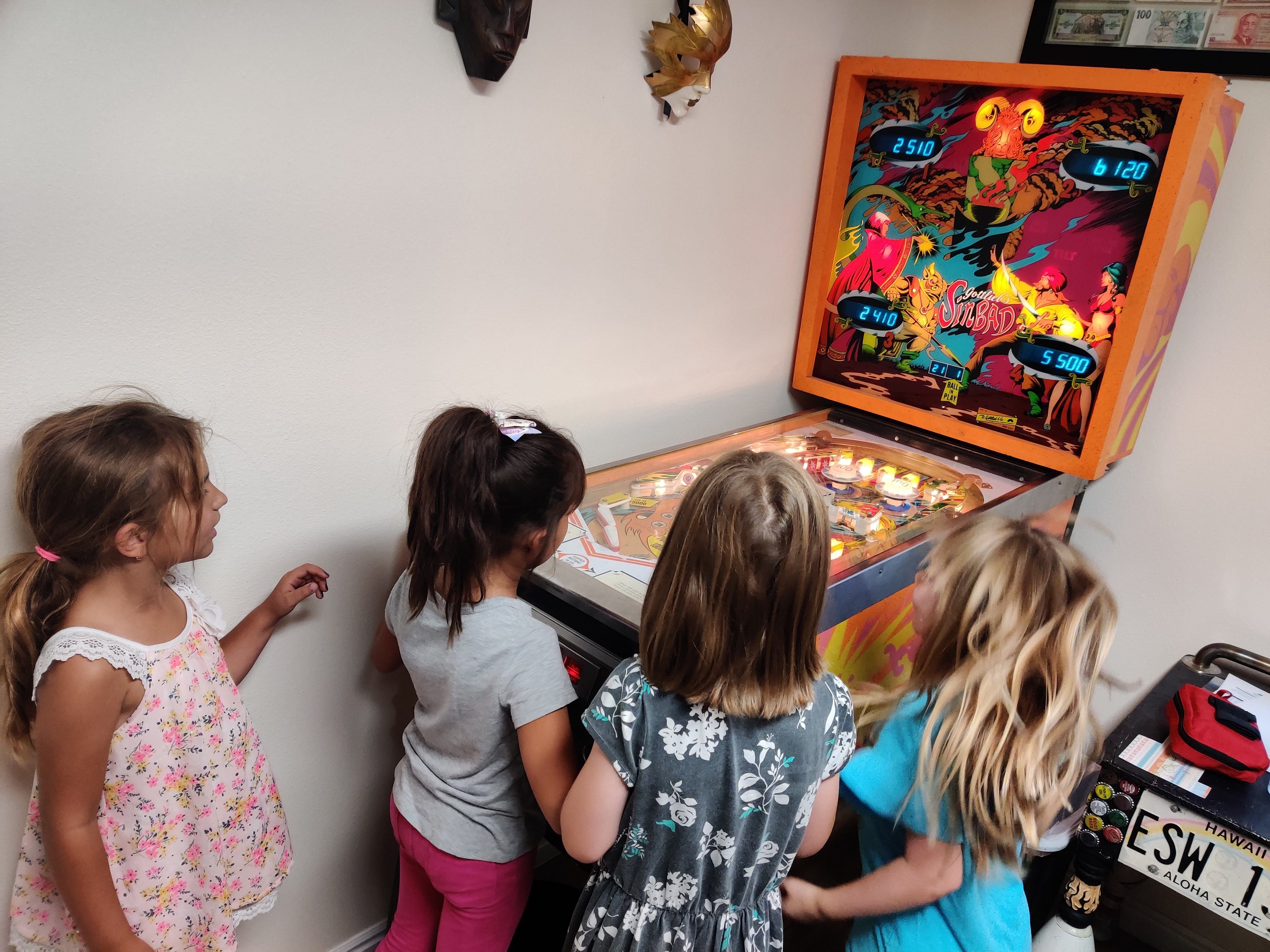
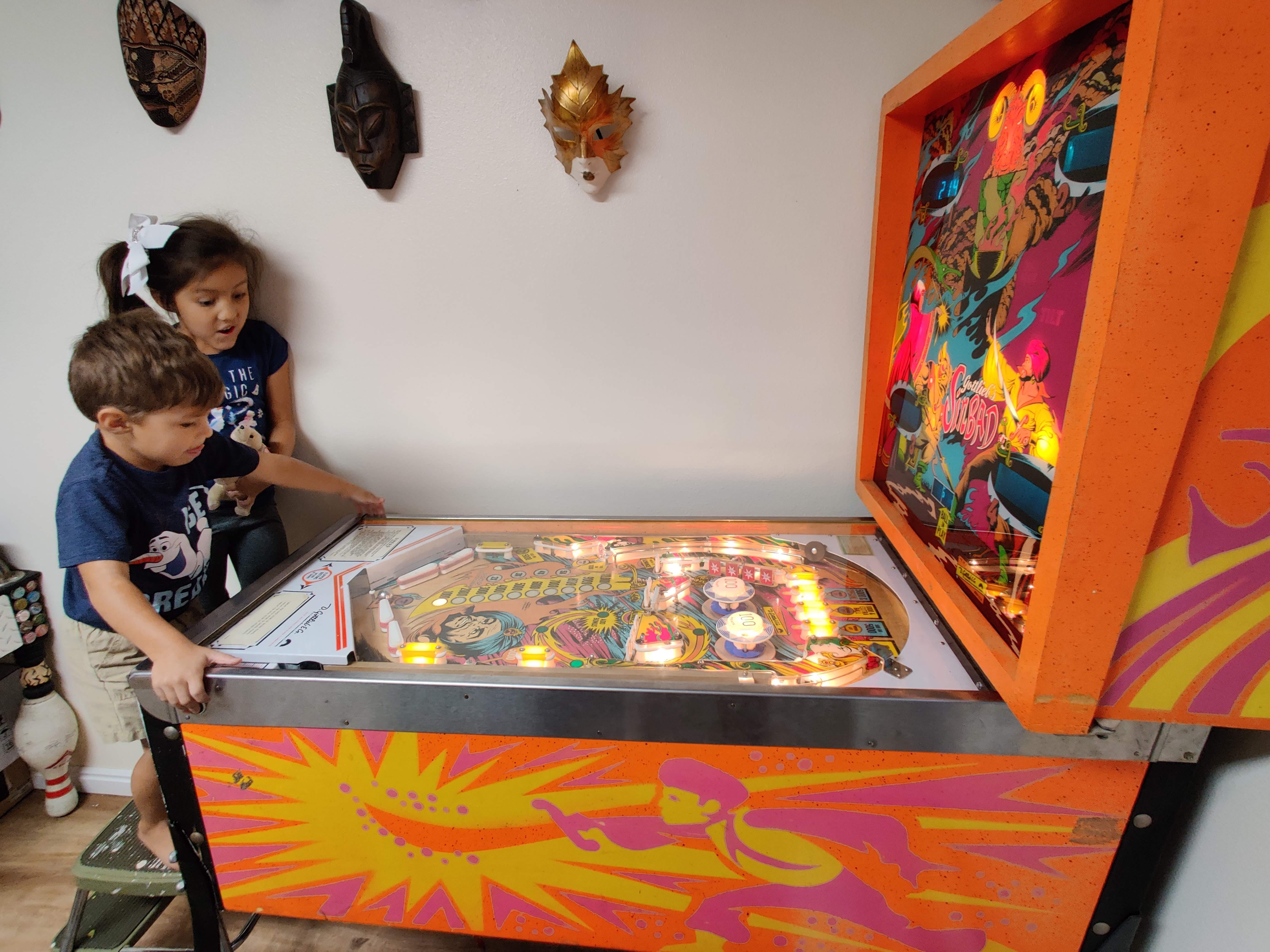
It’s a 1978 Gottlieb Sinbad — orange and yellow psychedelic art, a snarling ram on the backglass, the kind of single-level playfield that was already on its way out the year it was made. Twelve thousand of these were built, right at the moment pinball was transitioning from the electromechanical era to solid-state. My family has had one of them for as long as I can remember.
Most pinball machines from that era are forgotten now. Sinbad isn’t, exactly, but it’s also not famous. It doesn’t show up on “greatest pins of all time” lists. It doesn’t have a multiball or an upper playfield or any of the design innovations that make collectors weak in the knees. What it has — what almost nobody talks about — is a strange historical footnote that quietly reshaped the entire pinball industry.
In 1977, Columbia Pictures released a movie called Sinbad and the Eye of the Tiger. It was the third film in Ray Harryhausen’s Sinbad trilogy, the kind of stop-motion adventure picture that made matinee audiences out of kids who would later grow up to design pinball machines. The bronze minotaur, the giant walrus, the Eye of the Tiger itself — all classic Harryhausen.
The same year Columbia released the film, Columbia bought Gottlieb. The pinball company. And almost immediately, Gottlieb made a Sinbad pinball machine.
This had never happened before — not quite like this. Sure, there had been pinball machines with movie themes. There had been licensed pins. But Sinbad was something new: the movie studio that made the movie now also owned the pinball company that made the pinball. The cross-promotion was internal. The synergy was vertical. Sinbad the movie was on screens. Sinbad the pinball machine was in arcades. The same corporate parent owned both.
Every pinball machine you’ve ever played that’s based on a current Hollywood film owes something to that 1977 corporate deal. Stern’s Lord of the Rings pin. Jersey Jack’s Hobbit. The Marvel pinball lineup. Every Star Wars pin from every era. The 30+ years of pinball-and-Hollywood vertical integration that became standard industry practice — that pattern was invented, almost incidentally, when one studio bought one pinball company in one specific year and then made one machine to match.
Sinbad isn’t the greatest pinball machine ever made. It’s not even the greatest pinball machine made in 1978. But it’s the machine that quietly reshaped what pinball could be in the era of licensed entertainment, and it’s the machine that taught me to love this hobby. So when I decided to start a pinball review series called The Skill Shot, there was only one place to begin.
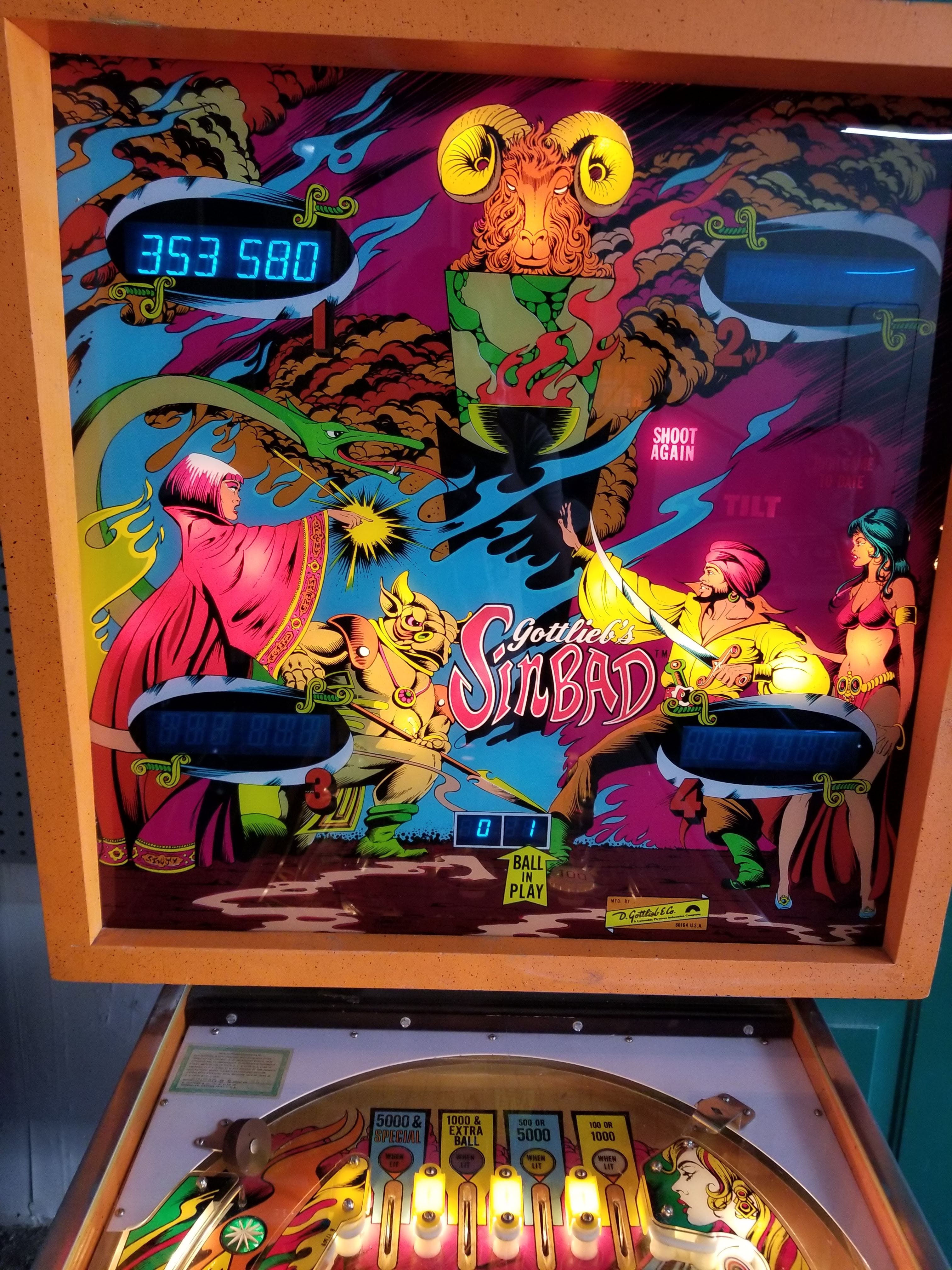
Episode 1 is a deep-dive into Sinbad: the history, the Columbia Pictures story, the playfield, the multiplier ladder, the strategy, and a narrated ball. At the end I score it on the FlipScore — a 100-point rubric I’ll be using on every machine I review.
The Skill Shot is a weekly pinball review series. New episodes drop every week, and I’ll be writing companion essays here for the machines that have a story worth telling beyond the video.
If pinball is your thing — or if you’re pinball-curious and want a tour through the strangest hobby in the hobby world — subscribe.