

The Pinball Machine That Invented Modern Pinball
A deep dive into Williams' Black Knight (1980) — the game that taught a flat playfield to stand up.

I have to start with a thank you, because I genuinely didn’t see this coming.
The Black Knight episode has become a successful video for this new channel The Skill Shot. It crossed a thousand views in its first couple of days, brought in a wave of new subscribers, and — the part I care about most — filled the comments with people telling stories. Somebody spent their entire college fund on a Black Knight back in the day. Somebody else heard it talking from across an arcade at Disney World’s Contemporary Resort and watched their quarters disappear. One guy’s dad played it so much he could have bought one. I loved reading those memories about this great game.
That’s the thing about this machine. It doesn’t just get views. It pulls memories out of people. And the more I dug into its history while making the video, the more I realized I’d only scratched the surface in nine minutes. So this is the deeper cut — the stuff that didn’t fit, and the context that makes a 45-year-old pinball machine still feel like a turning point.
1980: a flat world
To understand why Black Knight mattered, you have to remember what pinball was before it.
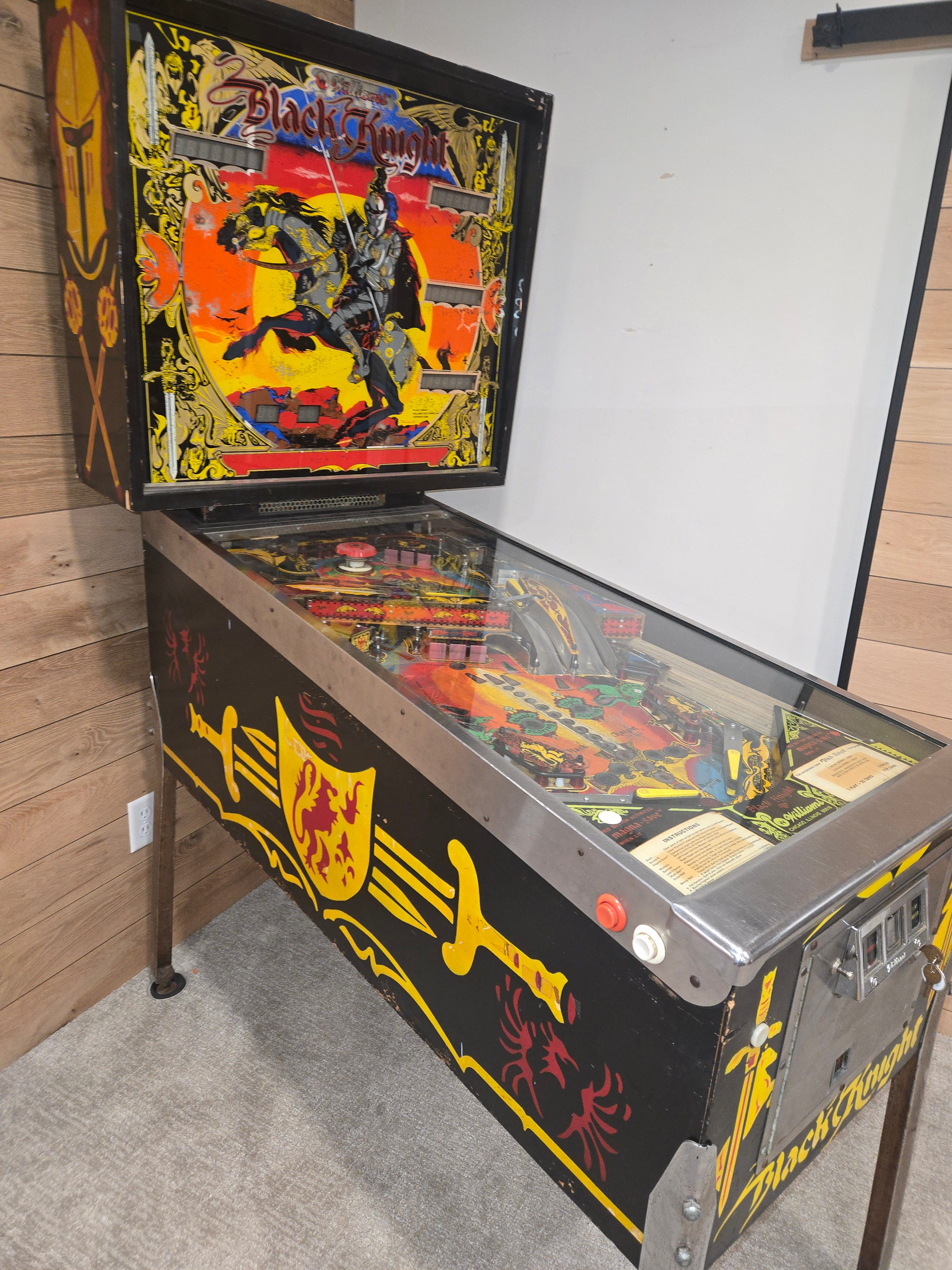
For its entire history up to that point, pinball had been a flat game. The playfield was a single sloped plane of wood. You launched a ball, the ball rolled around on that one surface, and eventually it drained. The art got better, the rules got deeper, but the basic geometry hadn’t changed since the 1930s. Even the jump to solid-state electronics in the late ‘70s — digital scoring, electronic sound — left the physical game more or less where it had always been.
Designers had dreamed about a multi-level playfield for decades. Harry Williams himself, the founder of the company, had kicked the idea around. The problem was never the imagination. It was the engineering. How do you build a second floor over the playfield without the ball constantly smacking into the wires, coils, and mechanisms hanging underneath it? How do you give the ball enough clearance to actually play up there? Nobody had cracked it.
In November 1980, a 30-year-old Williams designer named Steve Ritchie did.
The man behind the knight
If you don’t know Steve Ritchie’s name yet, you will after this. He is, by the numbers, the best-selling pinball designer in history, and within the hobby he’s known as “The Master of Flow” — sometimes just “The King of Pinball.” That nickname is the key to understanding everything he makes. Ritchie designs games around speed: long smooth shots, satisfying loops, a ball that feels like it’s flying rather than bouncing. His tables flow.
By the time he built Black Knight, he’d already had a monster hit with Flash in 1979 — a game with a revolutionary figure-8 layout that sold over 19,000 units and was the first pin to use bright flashing lamps. He wasn’t a rookie. But Black Knight is where he made his real statement.
And here’s a detail I love: that menacing voice taunting you from the machine? That’s Steve Ritchie himself. He didn’t hire a voice actor. He stepped up to the microphone and became the Black Knight.
He didn’t do it alone, of course. The software and electronics were handled by Larry DeMar — a name that would go on to appear next to Ritchie’s on some of the greatest games ever made. The artwork was by Tony Ramunni. The sound was composed by John Kotlarik. But the concept, the design, the mechanics, and the voice were all Ritchie.
The innovations — and there were a lot of them
This is where Black Knight stops being “a good old game” and becomes a genuine landmark. Most machines are lucky to introduce one new idea. Black Knight showed up with an armful — and a couple of them I only fully appreciated after sharp-eyed viewers pointed them out in the comments.
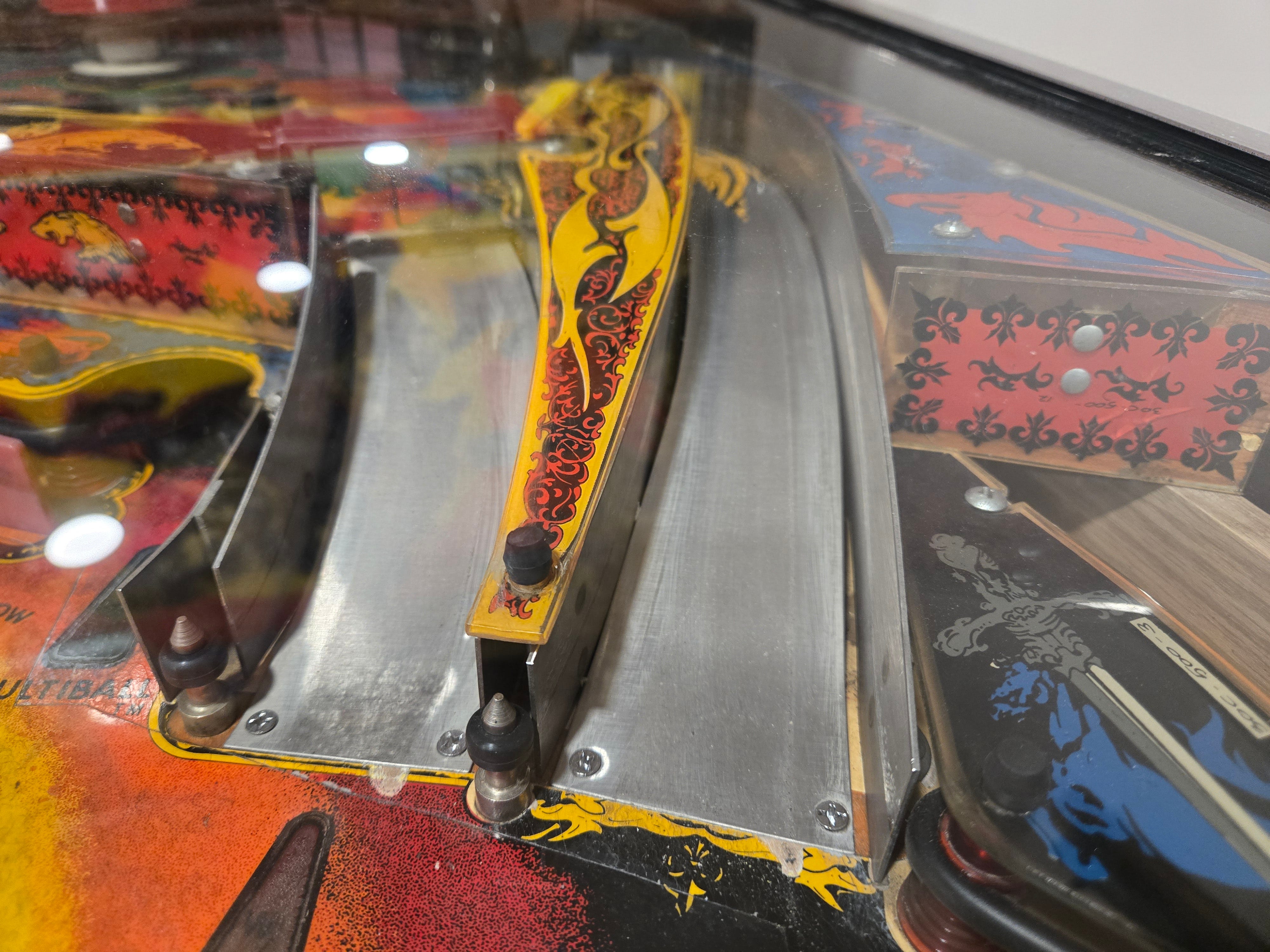
The two-level playfield. This is the headline. Black Knight was the first solid-state pinball machine with a true multi-level playfield — a second deck of play suspended above the main one, with a ramp carrying the ball up and dropping it back down. Ritchie solved the clearance problem everyone else had choked on, and in doing so he turned pinball from a flat game into a three-dimensional one. Almost every machine with a ramp, an upper playfield, or a second level — which is to say almost every machine made since — owes something to this design. This is the single biggest reason I called the video “the pinball machine that invented modern pinball.” It’s not hyperbole. The vertical playfield is the dividing line between old pinball and everything that came after.
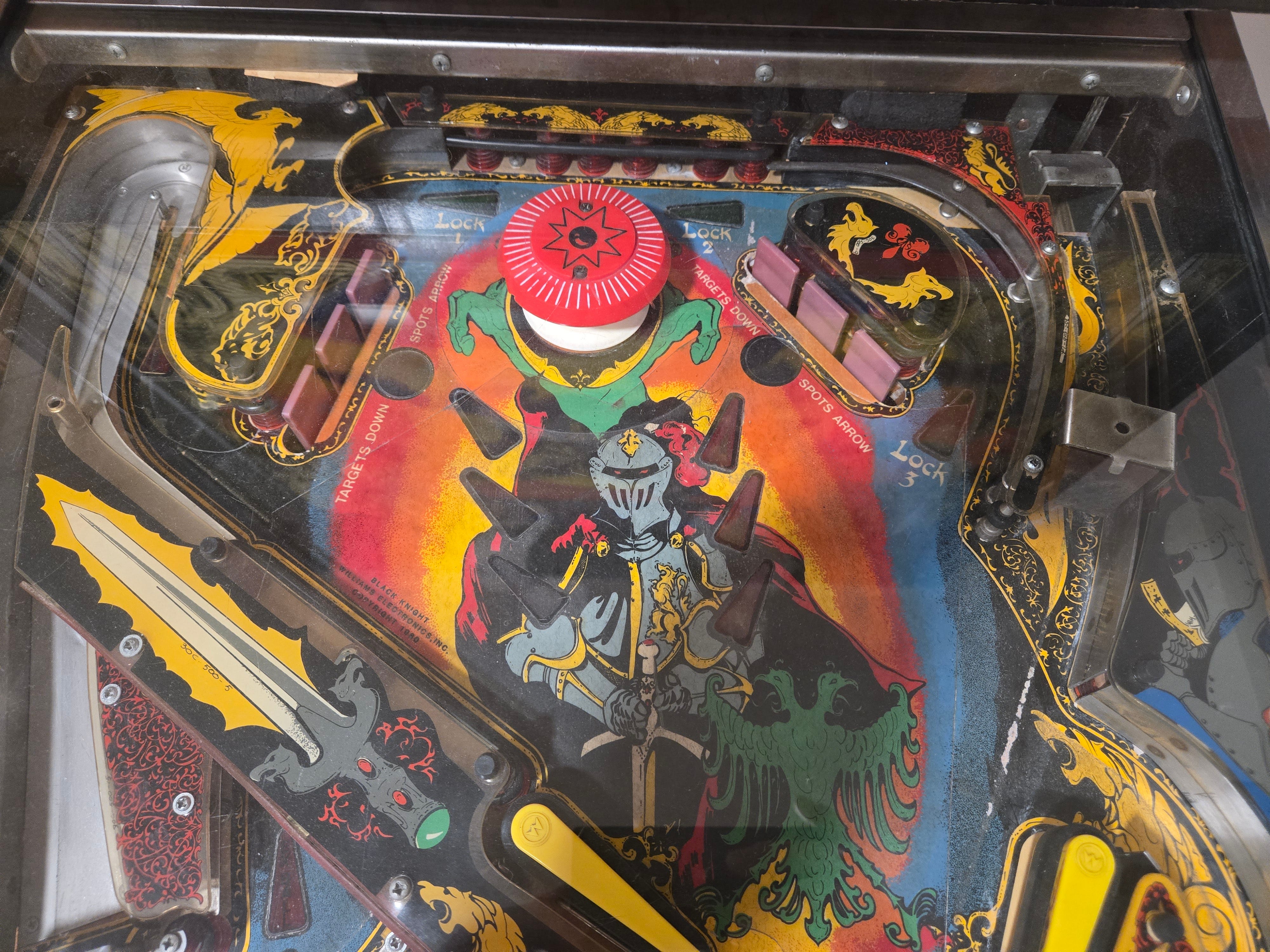
Magna-Save. Black Knight was the first game with the patented Magna-Save feature: a player-controlled magnet on the outlanes. When a ball is screaming toward the drain on the side, you hit a button and a magnet grabs it, giving you a shot at saving your ball. It put a new kind of decision in the player’s hands — when do you spend your save? — and it’s a direct ancestor of every ball-save mechanic in modern pinball.
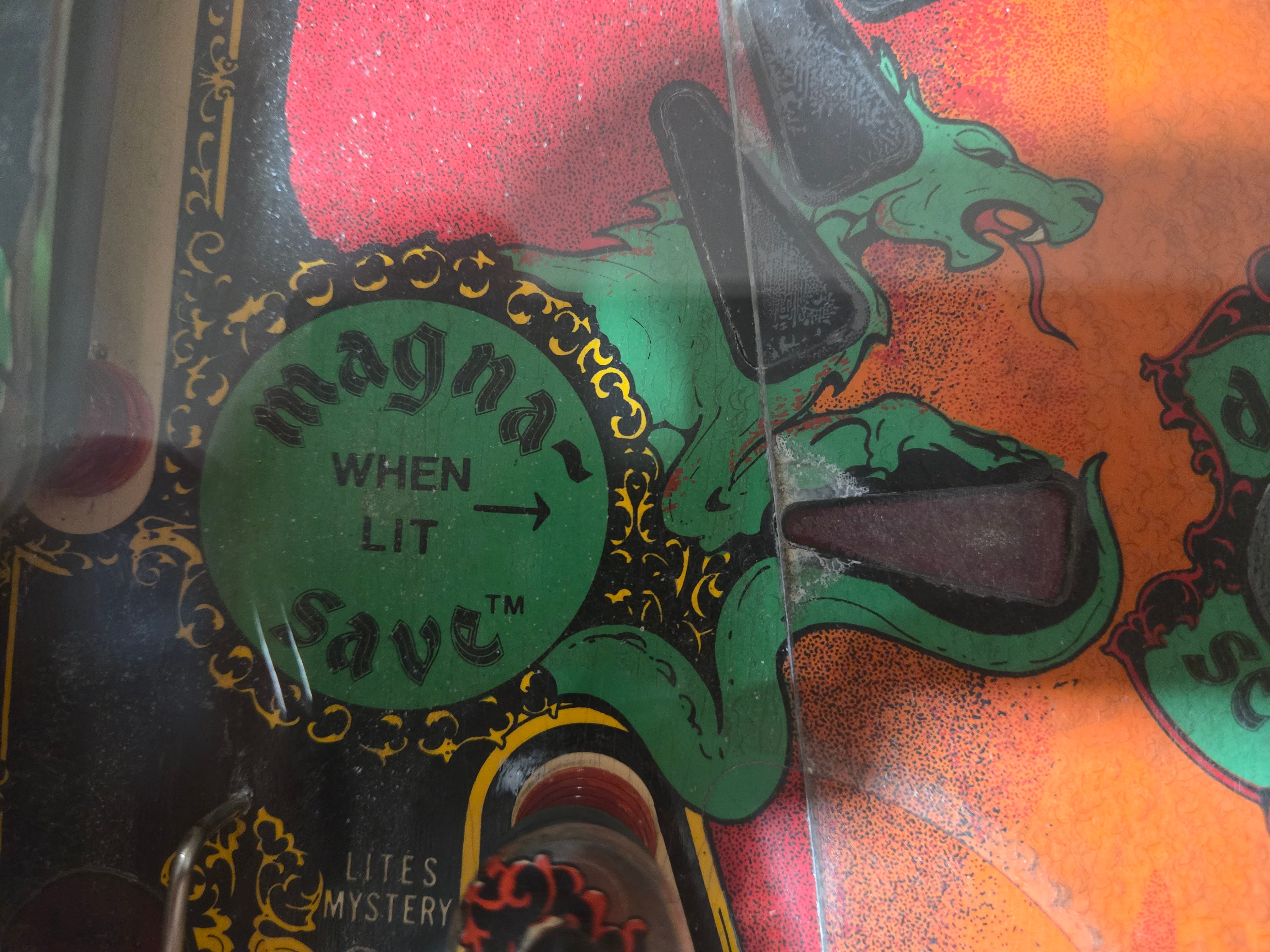
Multiball. Black Knight ran a three-ball multiball at a time when having more than one ball in play at once was still a novelty. The chaos of three balls flying around two levels while a disembodied voice screams at you was, in 1980, genuinely overwhelming in the best way.
The operating system you couldn’t see. This is the one viewers had to point out to me, and it might be the most important first of all. Black Knight debuted Williams’ new System 7 hardware, and with it a brand-new operating system written by software man Larry “LED” DeMar — the same Larry DeMar who’d soon leave to co-found Vid Kidz with Eugene Jarvis, the duo behind arcade legends Defender and Robotron. His OS, called PERC, did something no pinball had done before: it multitasked. Earlier games ran their code in a rigid, fixed loop, and any fancy effect had to be hacked in around the limits of the flipper ROMs. Multitasking let the machine juggle everything at once — two playfields of logic, timers, speech, and display effects all running concurrently — and even handle 7-digit scores with commas natively. You can’t see it on the playfield, but underneath, it quietly rewrote how pinball software worked.
Player-initiated countdown rules. That multitasking OS unlocked another likely first. As far as DeMar himself and the collecting community can tell, Black Knight was the first game with player-started timed — “countdown” — rules. (DeMar offers one caveat: Bally’s Space Invaders had a single timed target lamp before it, but it lit at random rather than on the player’s command.) Start a mode, beat the clock: that simple idea is the backbone of how nearly every modern game’s rules work, and it traces straight back to here. The same software leap also made elaborate display effects practical, paving the way for the alphanumeric displays in Ritchie’s own High Speed a few years later and, eventually, the dot-matrix animation of the 1990s golden age.
Faceted playfield inserts and front-door diagnostics. Smaller things, but they mattered. The faceted inserts caught the light differently and made the playfield pop. And the machine had built-in diagnostics on the front door — a self-test system operators could use to troubleshoot — which was such a forward-thinking idea that it won an award all on its own.
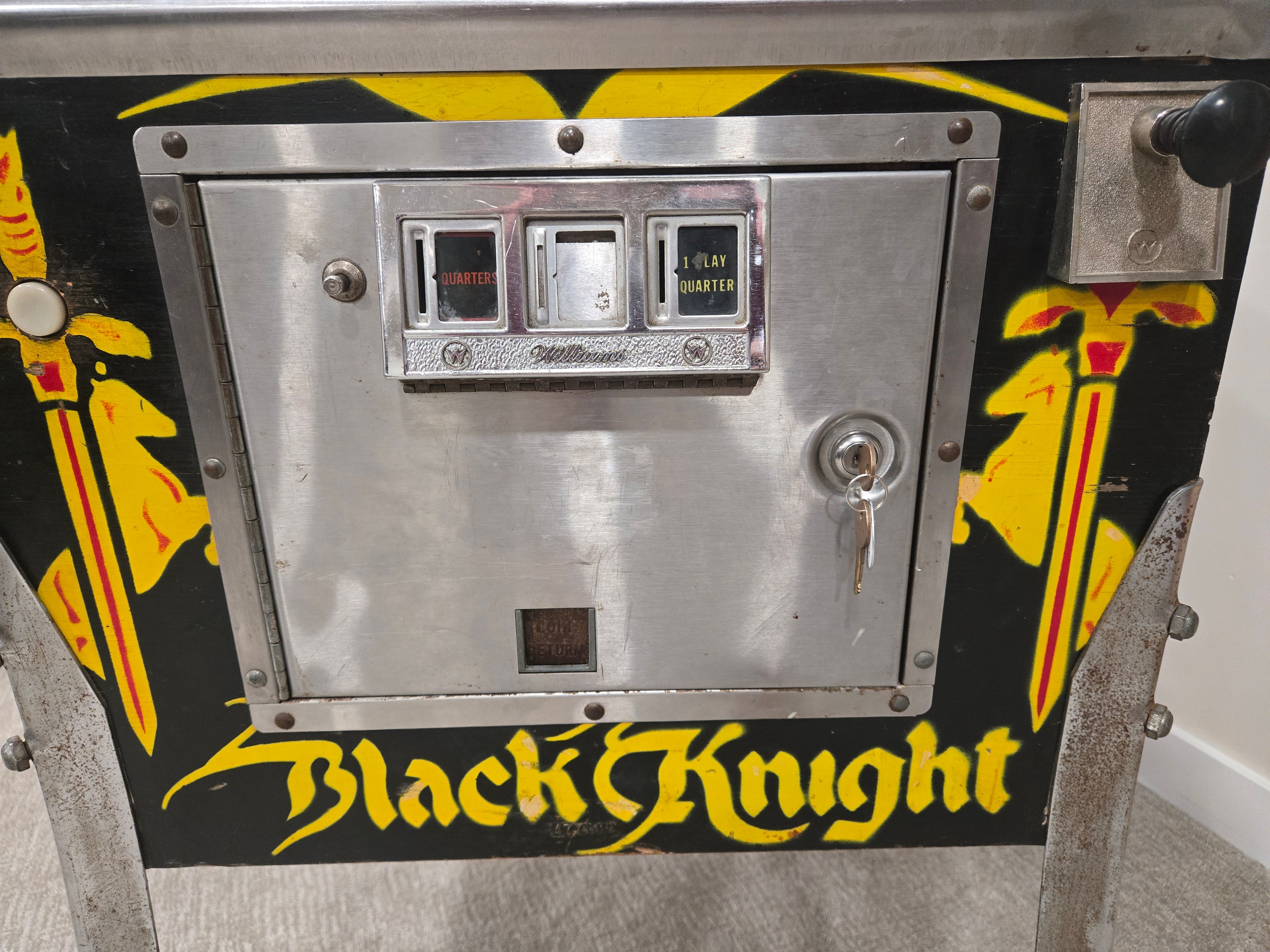
Speaking of which: in 1981, Black Knight took home Play Meter awards for both Best Pinball and Best Technical Innovation. The industry knew exactly what it was looking at.
The voice that haunted the arcade
I want to spend a second on the sound, because it’s a huge part of why this machine stuck in people’s heads.
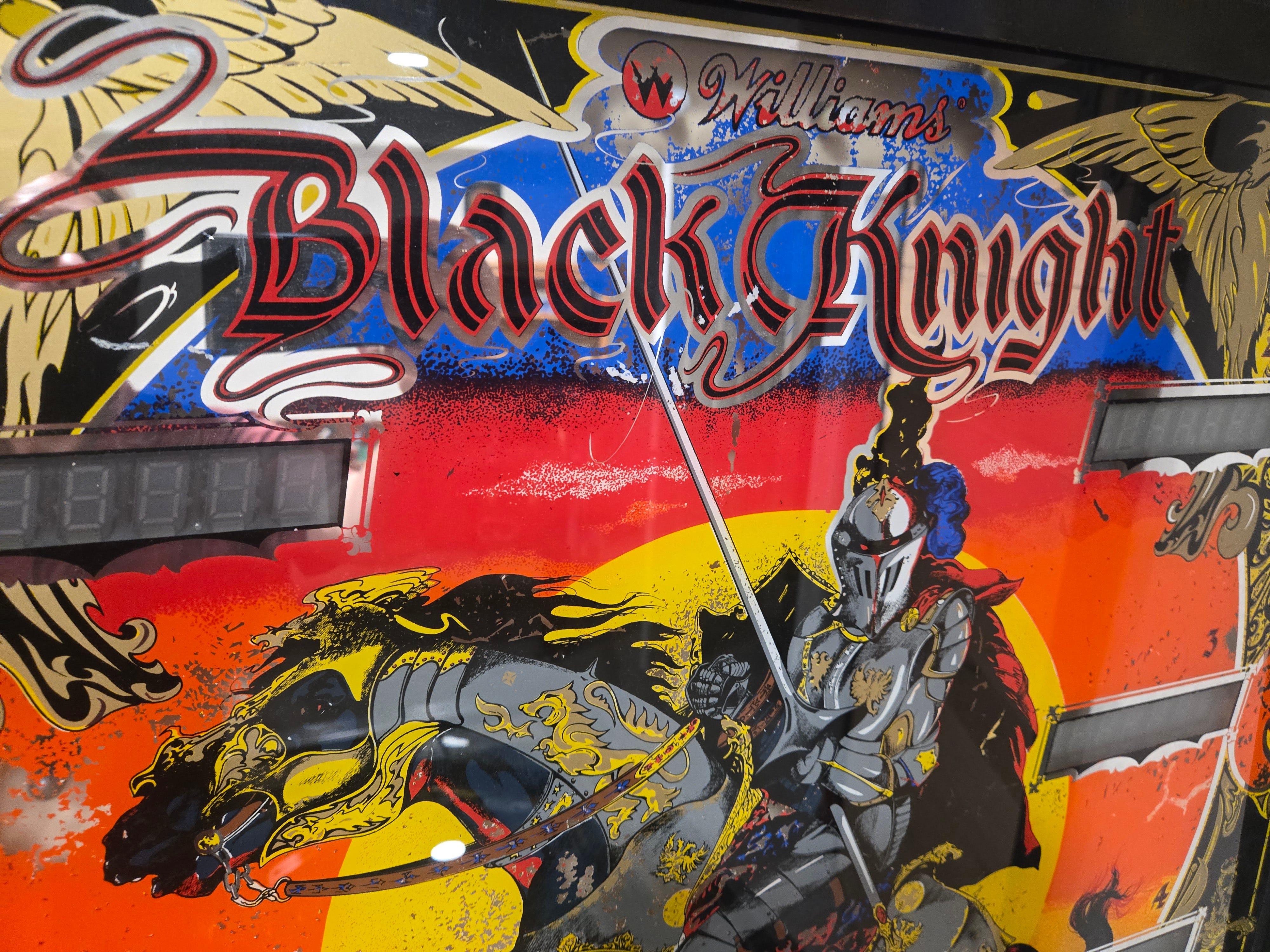
Black Knight was not the first talking pinball machine — that honor goes to Williams’ own Gorgar in 1979. But Gorgar could only grunt out a handful of caveman-style words (”Me Gorgar!”). Black Knight was the first machine to speak in full sentences. The Knight taunts you, threatens you, dares you to keep playing.
By modern standards the speech is gloriously crude. The synthesis was so low-resolution that “slay” comes out sounding like “play,” and the famous “Fight against three enemies!” callout turns “three” into something like “th-lee.” Collectors still affectionately quote the garbled versions. But in a loud arcade in 1980, a machine that looked at you and talked — that threatened you — was electric. That’s the sound the commenter at the Disney World arcade was remembering. It reached across the room and grabbed people.
A genuine hit
Black Knight wasn’t just critically important — it sold. Williams built an initial run of around 10,000 units, then, six months later, restarted the production line to clear a backlog of orders from distributors all over the world. The final confirmed total was 13,075 machines. For a pinball machine, in any era, that’s a big number, and it cemented both the multi-level concept and Steve Ritchie’s reputation.
It also helped keep Williams at the front of the pack at a moment when the industry was about to get hammered by the home video game boom. Ritchie would do it again in 1986 with High Speed — a game inspired by an actual police chase in his Porsche — which sold over 17,000 units and is widely credited with reviving the entire pinball market. But Black Knight was the proof of concept for the whole flowing, vertical, theatrical style that would define the medium.
A trilogy across three eras
Here’s something that makes Black Knight almost unique: it became a franchise that Steve Ritchie returned to across his entire career.
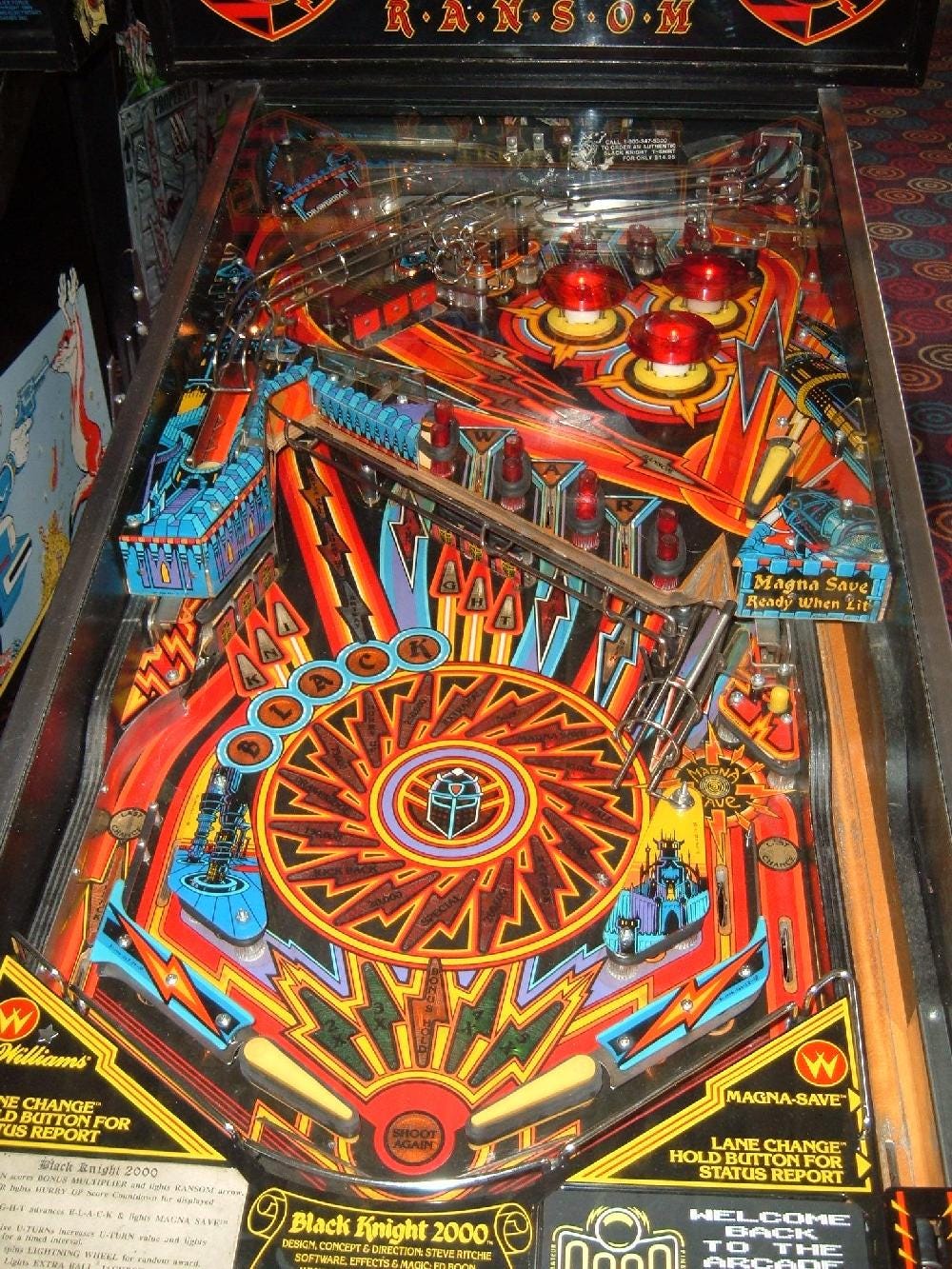
In 1989 he built Black Knight 2000, the direct sequel, which is remembered for one of the greatest soundtracks in pinball history — a genuinely anthemic score that people still hum. Then, thirty-nine years after the original, Ritchie came back one more time for Black Knight: Sword of Rage, released by Stern in 2019. That modern version pulled in a soundtrack by Scott Ian of Anthrax (with Brendon Small) and custom speech from Ed Robertson of Barenaked Ladies.
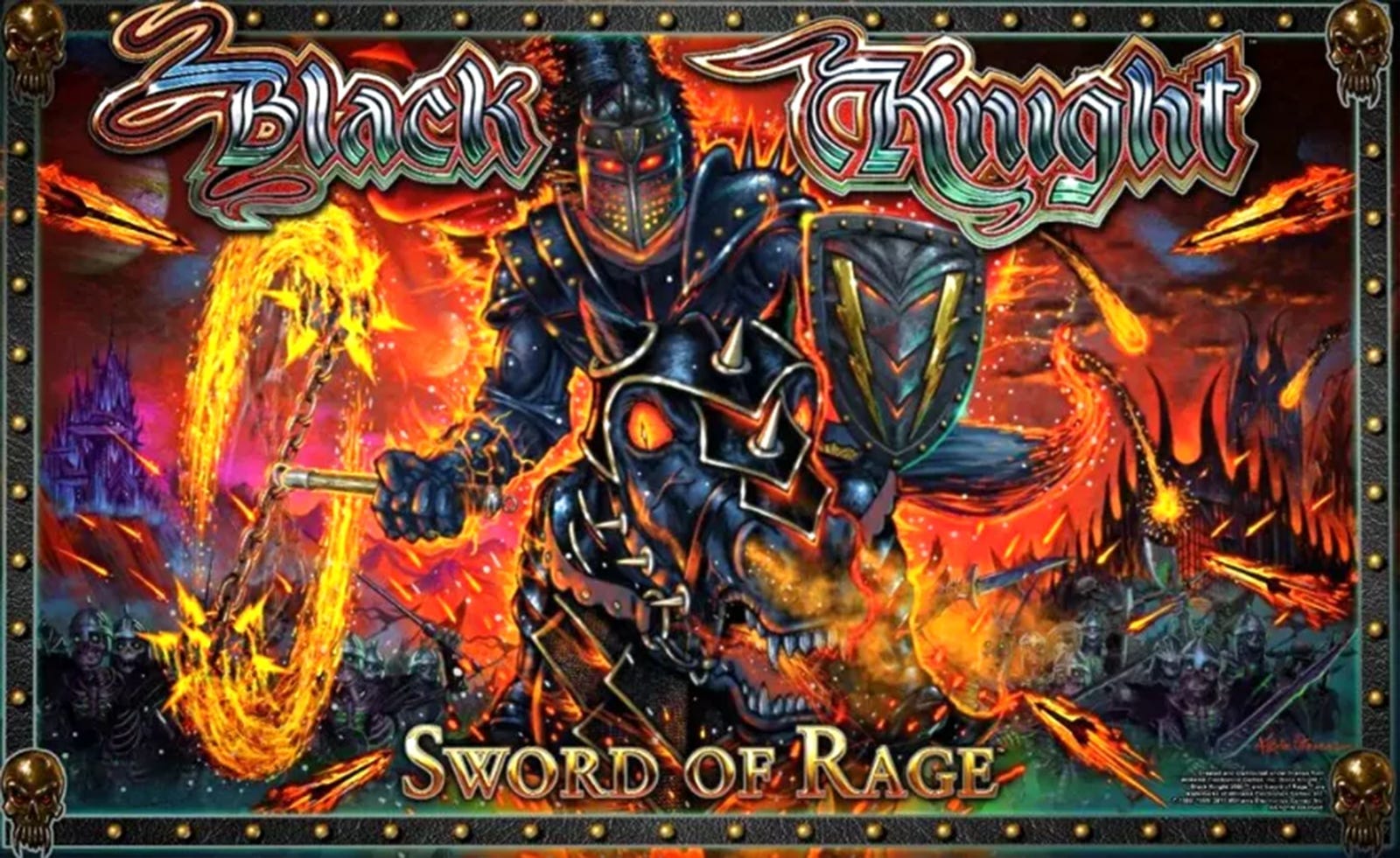
Think about that arc. The same designer, the same character, spanning early solid-state in 1980, the dot-matrix golden age in 1989, and the modern LCD era in 2019. Three machines, three completely different generations of pinball technology, one Black Knight. There’s almost nothing else like it in the hobby.
Owning one today
So what does it take to get a Black Knight in your game room?
It’s one of the more attainable landmark machines, which is part of its charm. Working examples trade across a wide range depending on condition — you’ll see them anywhere from a few hundred dollars for a project up to the mid-thousands for a nicely restored one, with the Pinside marketplace’s trimmed median asking price sitting around $3,200. It currently holds a rating of about 7.7 out of 10 from a few hundred Pinside reviewers and lands around #157 in their overall game rankings — respectable for a machine this old, especially given how many thousands of titles exist.
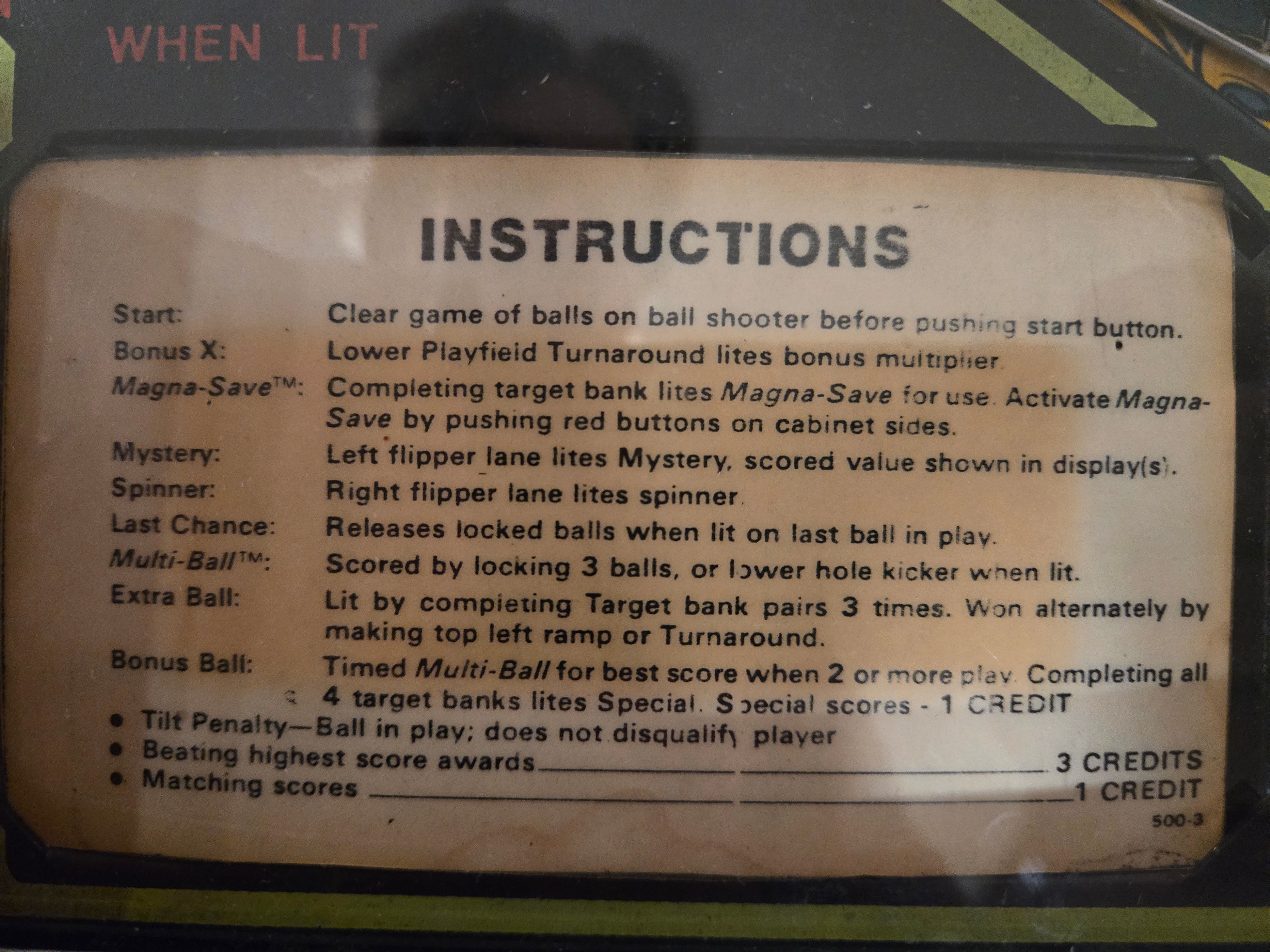
If you’re shopping, the things to watch are the things that make it special. Make sure the upper playfield and its ramp are clean and working. Confirm the Magna-Save magnets fire. And listen for that speech — the sound boards from this era can be finicky, and a Black Knight that can’t taunt you is only half a Black Knight.
It’s a System 7 Williams machine, which means it’s old enough to need some care but well-documented enough that parts and knowledge are out there. For a piece of history this significant, it’s remarkably within reach.
Why it still matters
Every now and then a single product redraws the map for everything that follows it. Black Knight is one of those. It took pinball off the flat plane it had lived on for half a century and stood it up into three dimensions. It put a magnet in your hands, threw three balls at you, and dared you — in a voice that’s still rattling around in people’s memories four and a half decades later — to keep playing.
That’s why the video resonated, I think. People aren’t just nostalgic for a game. They’re nostalgic for the moment pinball changed, even if they didn’t know that’s what they were feeling at the time.
Thanks for reading, and thanks to everyone who watched, subscribed, and shared their stories on the video. There’s a new episode every Thursday, and the list of machines I want to cover keeps getting longer thanks to your comments. If you’ve got a Black Knight memory of your own, I’d love to hear it.
See you next week.
— Ryan, The Skill Shot